
Royal Palm Beach Address Eras
No single roll lists every past resident. Start with the source that fits the age of the property, then move between title records and household evidence. Royal Palm Beach incorporated in 1959, so a search before that date is usually a land-history question under county geography, not a village resident search.
The table separates sources by era and by what each can prove. It also marks the important 1968 divide between the online recorded-document index and earlier record books or microfilm.
| Source | Years it covers | Where held | What it shows |
|---|---|---|---|
| Official Records online | 1968 to present | Palm Beach County Clerk eRecord | Deeds, liens, mortgages, plats, parties, and book/page |
| Earlier deed books and microfilm | Before 1968 | Clerk counter and archives | Prior title by party, legal description, or book/page |
| Polk and metro directories | Documented samples, 1916 to 1980-81 | PBC Main Library | Names, addresses, occupations, and some street-order entries |
| Federal census | Public through 1950 | NARA and library databases | Households at ten-year intervals |
| Village permits | Post-development; online start not fixed | Village Building or records request | Work, applicant, contractor, dates, and inspections |
A modern parcel usually begins with PAPA. A trail that reaches before the planned buildout shifts toward deeds, plats, maps, and county history.
Start Royal Palm Beach History at PAPA
Enter the exact situs address in Palm Beach County Property Appraiser Public Access. Copy the parcel control number, current vesting name, legal description, and the most recent sales book and page. The parcel control number, or PCN, is the county's stable parcel identifier. The situs address means the location of the land. It differs from the owner's mailing address.
The distinction matters. Tax mail sent elsewhere does not prove that the owner never lived at the parcel, and a homestead flag supports owner occupancy without proving current physical presence. PAPA names owners, not every occupant. Use it as the index card that opens the trail, not as a complete list of previous residents.
Address flow: situs address to PCN to legal description to latest deed to seller, then repeat the deed search backward.
Walk Palm Beach County Deeds Back
Open the Palm Beach County Official Records search with the current deed's book/page or owner name. A purchase deed identifies the grantor, the grantee, execution and recording dates, the land description, and often return or preparer information. Compare the legal description with the parcel card before accepting the match.
- Retrieve the current purchase deed from the sales reference on PAPA.
- Write down the seller, or grantor, plus the recording date and legal description.
- Search that seller as a grantee before the sale date to find the earlier purchase.
- Confirm the same lot, block, subdivision, or other legal description.
- Repeat until the online index ends, then carry book/page details to the Clerk counter.
A name match alone is weak. Spouses, trusts, estates, companies, and people with the same name can break a quick search. The land description supplies continuity when street wording or a postal city changes.
- Grantor
- The person or entity transferring an interest in the recorded document.
- Grantee
- The person or entity receiving that recorded interest.
- Chain of title
- The linked sequence of transfers for the same land.
- Legal description
- The lot, block, subdivision, metes-and-bounds, or other formal land identity.
Royal Palm Beach Records Before 1968
The online Official Records index and images are documented from January 1, 1968. Earlier deeds require Clerk books, microfilm, or archive help. The Main Courthouse public-records and microfilm counter is in Room 4.2500. Arrive with a book/page, party names, approximate date, parcel legal description, or all four.
An online dead end does not mean the prior transfer is gone. It means the access channel changes. Ask the Clerk's Official Records staff about inspection, an uncertified copy, or a certified copy. If a volume is not at the active counter, a focused public-record request can help identify its storage or retrieval route.
Note: Use the legal description across the 1968 cutoff because older deed indexes may not carry a modern street address.
Date Royal Palm Beach Construction
Royal Palm Beach Building records can place work at an address and may list the owner or applicant, contractor, scope, value, plan review, inspections, corrections, and certificate of occupancy or completion. Current work moves through an e-permitting and ProjectDox environment. That environment is designed for applicants and may require registration; it is not a fully documented anonymous archive.
For older or unindexed permits, contact the Village Building Department or use the Village public-record request route. Supply the street address, PCN, approximate year, and permit type. Permit dates can show when a structure was first built or changed, but the listed applicant should not be treated automatically as a resident.
Match Royal Palm Beach Past Households
Deeds identify title, while city directories and census schedules can identify a household. The local printed shelf is mainly metropolitan West Palm Beach and Palm Beach County coverage. Documented Polk samples run through 1980-81, the Riviera Beach collection spans 1936 to 1987, and Florida-Piedmont material spans 1934 to 1986. The Royal Palm Beach city directory collections are described separately because their shelf and publisher history is its own task.
Choose the printed issue nearest a deed transfer. Search the owner by surname, then check the reverse or street-order section for the address. Record spouse, occupation, and all abbreviations. Move one volume at a time. When the period reaches a public census year, compare the named household, age, relationships, and street context. Census schedules are public through 1950 under the 72-year rule.
- Place each deed owner on a dated title timeline.
- Add directory occupants beside the closest year without merging the two roles.
- Add a census household when a released schedule fits the address and era.
- Mark gaps as unknown, then test them with newspapers, probate, or permits.
Lawful use. Research previous residents for family history, property history, estate work, or personal curiosity. Never use records to track, harass, or harm a living person.
Close Royal Palm Beach Resident Gaps
Probate and obituaries can explain a transfer made after a death. Search the Clerk's court-record channel for a probate case tied to a known name and date range, then use the inventory and filed documents that are public. An obituary can connect relatives, a former address, funeral details, or a move. The county library's Government Research Service can search the Palm Beach Post and other news databases with spelling variants and a narrow date window.
Florida death records also have access limits. Cause-of-death information is restricted for deaths less than 50 years old, while older records have broader access. Review the Florida death certificate rules before ordering.
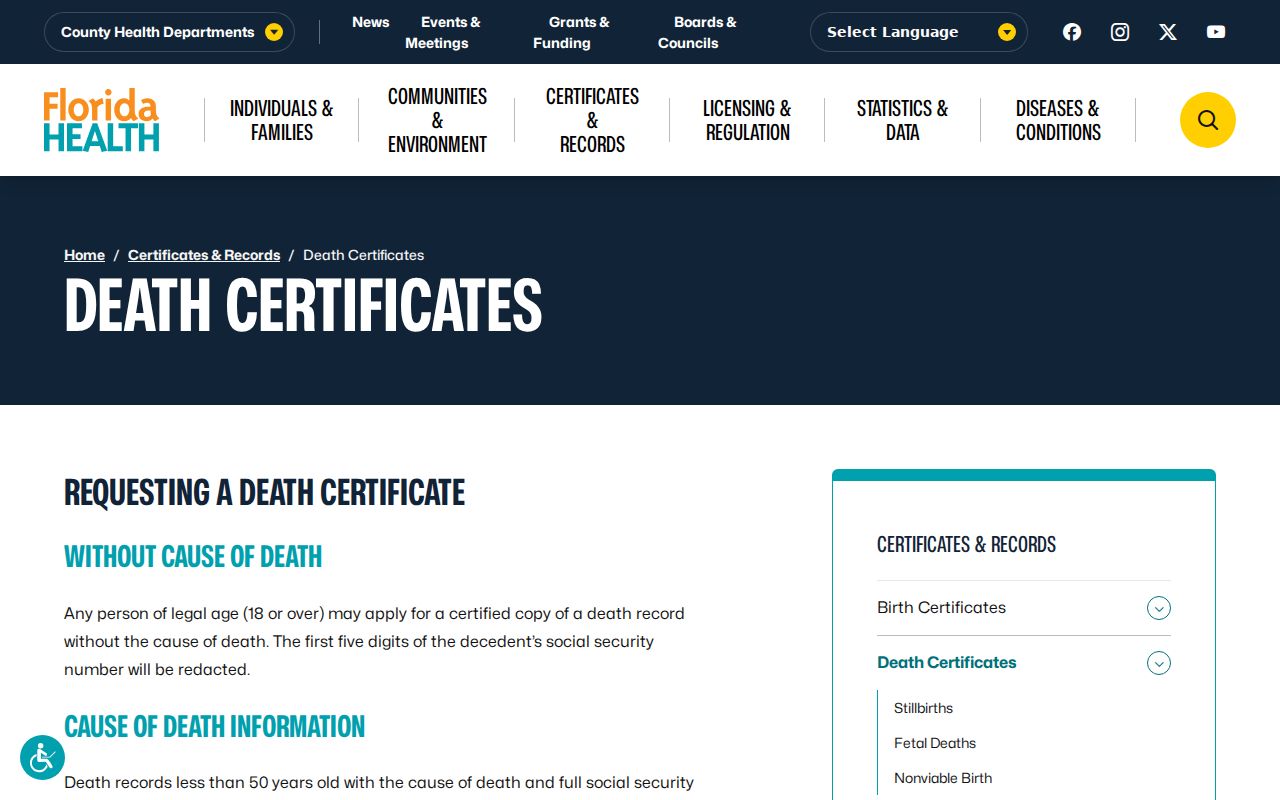
The official page helps distinguish a record that can be ordered from one whose sensitive details remain limited.
Before Royal Palm Beach Residents
Royal Palm Beach's modern address trail begins with incorporation in 1959 and a planned buildout during the 1960s. Food Fair founder Samuel Nathan Friedland acquired a broad tract in the early 1950s and sold part to developer Arthur Lefcourt. After Lefcourt's 1961 bankruptcy, Royal Palm Beach Colony continued development. By the middle of that decade the boulevard extended north, and by 1967 paved roads, a golf course, and a lake were in place.
This story changes the research question. A date before the subdivision may describe acreage, a tract, or a predecessor parcel rather than the prior resident of the present house. Compare old plats and deed descriptions to the current PCN. Palm Beach County itself was created from Dade County in 1909, so much earlier land events may require predecessor-jurisdiction, state, or federal sources.
The State Archives of Florida is a sound fallback for older government, map, and manuscript material.
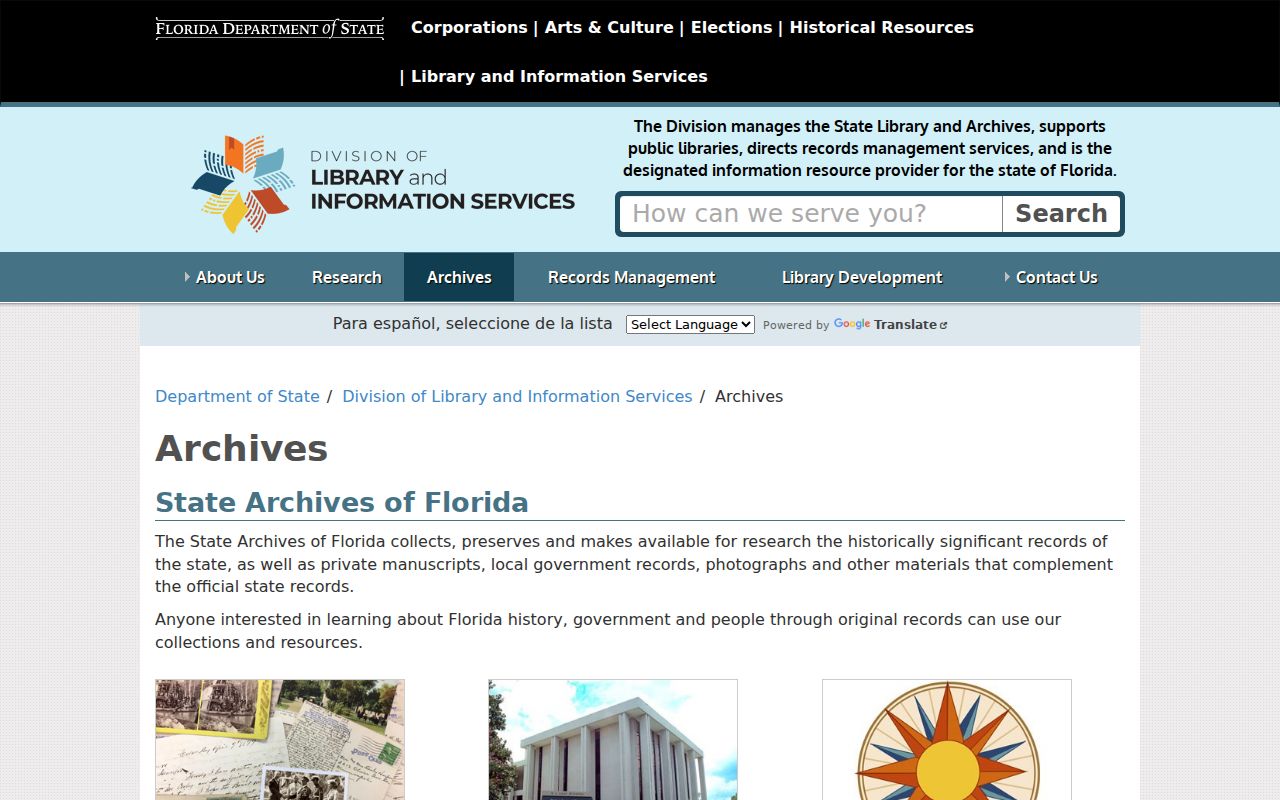
The archives route is most useful once the search has a tract name, person, date range, or government series.
Map Royal Palm Beach Record Gaps
Sanborn fire-insurance maps can show building footprints and uses in mapped older communities. Palm Beach coverage from 1924, updated to 1952, is documented. No Royal Palm Beach-specific Sanborn sheet was verified, which fits a postwar planned community but must remain a research gap, not a claim of total absence.
Use modern parcel maps, plats, aerial layers, and permits instead. The county GIS includes subdivision, parcel, road, municipality, ZIP, and aerial layers from several recent years. An old deed may name only a lot and block, so a recorded plat is often the bridge to today's address. Do not invent a street-renumbering event: none was located for the village. Postal spelling or ZIP changes are better handled with the PCN and legal description.
Verify Royal Palm Beach Previous Residents
A reliable conclusion states what each record proves. A deed proves a recorded transfer. PAPA shows the assessment owner and parcel facts. A permit records an application and work. A directory names a listed person at a point in time. A census records a household as enumerated. None should be made to stand for all the others.
| Strong owner link | Matching legal description across consecutive recorded deeds. |
|---|---|
| Strong household link | Directory or census entry supported by another dated source. |
| Unresolved gap | No source names an occupant for the target period. |
| Needed citation | Keeper, record type, date, index details, and image or page reference. |
Mark uncertainty instead of filling it with a guess. That discipline is especially important for previous residents who may still be living and for names shared by several people in Palm Beach County.